Overview
2025 became the year I pushed a design system beyond components and into something operational, measurable, and more connected to the product teams using it.
This retrospective is a candid look at the work I led across tokens, patterns, enablement, and the invisible collaboration work that kept the system alive.
Year at a glance
My focus throughout the year was on maturing our Design System beyond components and into something more operational, measurable, and sustainable.
Some of the highlights (TL; DR):
- Upgraded Figma tokens to variables and unified the core libraries into a single themeable source of truth.
- Built a pattern practice that teams could understand, document, and use.
- Measured adoption, tracked support requests, and launched AI tools to make the system easier to work with.
- Kept the system reliable by doing the many small, invisible decisions that help product designers ship faster.
- Learned (and also failed) different AI approaches along the way (a topic worth exploring another time).
Figma Design System Libraries 2.0
The work
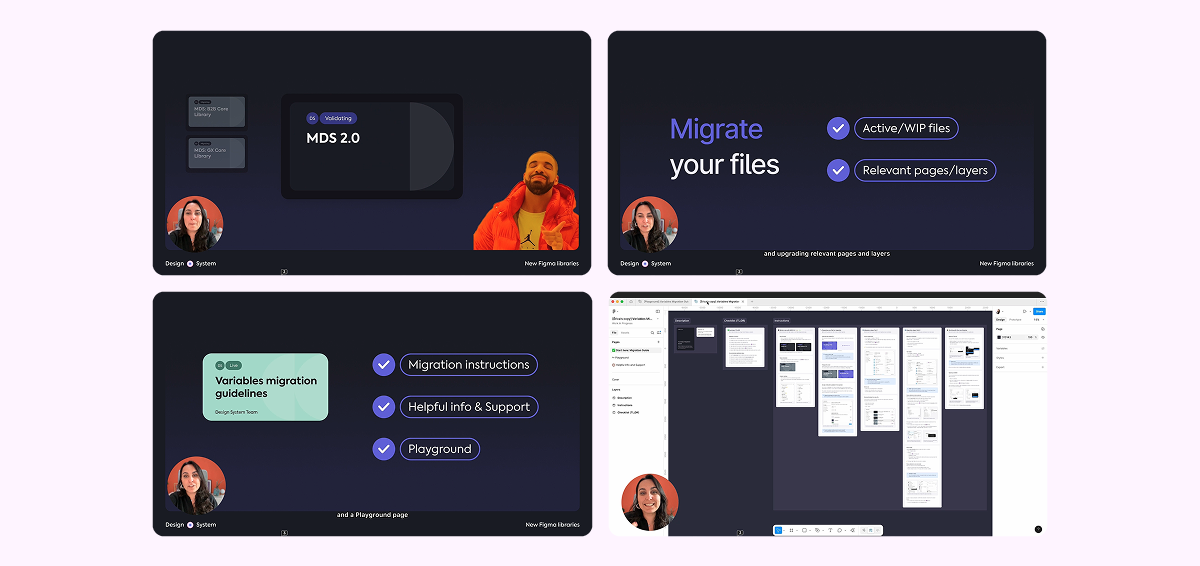
I reworked the style-based tokens library into a variables-first system, aligned it with code behavior, and consolidated two “core” Figma libraries into one themeable library.
What I did
- Refined the Design Tokens library structure by upgrading it to variables and aligning it with code behaviour, making it future-proof for upcoming projects.
- Used that foundation to unify our previous two core libraries into a single, themeable component library in Figma.
- Documented the migration with guides, a playground file, and video tutorials.
- Bridged design and engineering through token refinements using Tokens Studio and PR reviews.
Outcomes
Outcome: designers can use themes in Figma without hacks, tokens are more consistent across design and code, and the system is ready for multi-brand growth.
Design System Patterns
I defined what a pattern is — and what it isn't — for the system, then turned that definition into a usable practice.
The work included pilot documentation, a recommended pattern cycle, and a focus on the early Contextual Feedback Indicators pattern.
Outcome: teams gained shared language for patterns, designers had clearer guidance, and pattern work moved closer to a shared responsibility.
Philosophical take: patterns are often underestimated. Most of the work is alignment and collaboration.
Enablement, metrics, and measuring impact
I made the system easier to understand by tracking adoption and support requests, then using those signals to prioritise work.
I also helped build Nova, an internal AI assistant for the design system, and created extra DS tools that supported pattern definition and documentation.
Outcome: designers gained confidence, repetitive questions dropped, and the team had clearer signals about where the system needed help.
Collaboration and support
The system lived through real product decisions, so a lot of my time was spent helping designers navigate ambiguity, constraints, and deadlines.
I supported teams through Slack, reviews, documentation clean-up, and recurring cross-team discussions about quality and accessibility.
Outcome: better, faster decisions from designers, stronger trust in the system, and more of the work becoming a partner instead of a blocker.
Philosophical take: invisible work scales. The small things often matter more than the big, shiny projects.
Closing the year (and opening a new chapter)
A company reorg shifted my role out of the design system team and into Product Design, then gave me the chance to choose a new path.
That change made it clear that the future for me is at the overlap of design systems, engineering, and AI.
The takeaway: 2025 was a year of hands-on system work. 2026 is shaping up to be about bringing that systems mindset into new design and product challenges.